
Introduction
Walk into any home with young children, and you might see the same scene: an overflowing toy box filled with plastic gadgets, battery-operated gizmos, and characters from the latest movie. Meanwhile, the kids are in the corner, building a tower with a simple set of wooden blocks that belonged to their grandfather.
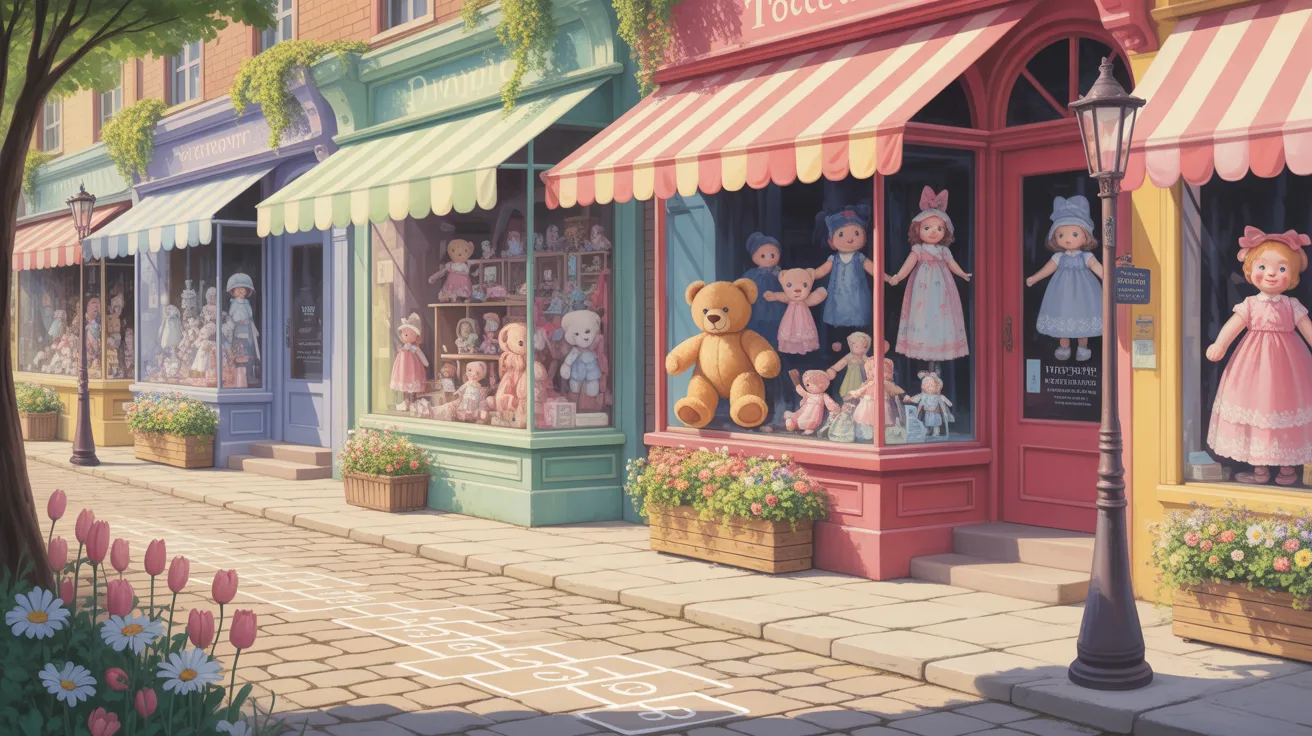
“At Hopscotch Lane, these are the toys that get passed down through generations…”
There’s a pattern here. Certain toys transcend trends, fads, and technological advances. They’re played with by toddlers and preschoolers alike. They get packed up for the next child, then the next. Thirty years later, they’re still intact, still loved, still sparking imagination.
What makes a toy timeless? It’s not about bells and whistles. It’s about something deeper: open-ended play possibilities, quality construction that actually lasts, designs so simple they never look dated, and that special something that invites imagination rather than dictating it.
This article looks at ten toys that have earned their place in childhood. No batteries required, no licensed characters needed, no apps to download. Just solid, reliable toys that children actually play with—not just once, but for years.
These are the toys stocked at Hopscotch Lane because they work. Generation after generation, they work.
What Makes a Toy Timeless?
Before diving into specific toys, let’s look at what they have in common.
Open-ended play possibilities: A good toy doesn’t tell a child what to do with it. Wooden blocks can be a castle today, a garage tomorrow, a zoo next week. The toy adapts to the child’s imagination, not the other way around.
Quality construction: Timeless toys survive real childhood. They get dropped, thrown, chewed on, left outside, and they keep going. This isn’t just about durability—it’s about respecting both the family’s investment and the planet’s resources.
Generational appeal: Parents remember these toys from their own childhoods. There’s something comforting about giving your child the same type of toy you loved.
Simple design that sparks imagination: The fancier the toy, the faster kids get bored with it. A toy that sings, talks, and lights up? Fun for a week. A simple doll? Played with for years.
No batteries or technology dependencies: Timeless toys work anywhere, anytime. No charging, no replacing batteries, no updates needed. Just pick it up and play.
Universal play value: These toys appeal to different kids at different ages in different ways. A three-year-old plays with blocks differently than a seven-year-old, but both play with them.
Hopscotch Lane’s Selection Criteria: The store only stocks toys that meet these standards. Every item has been tested by time, survived real childhood, and proven its worth. Staff have seen which toys children actually bond with and which ones get abandoned after a week.
If a toy can’t handle daily play for years, it doesn’t make the cut. Simple as that.
Toy #1: Wooden Building Blocks
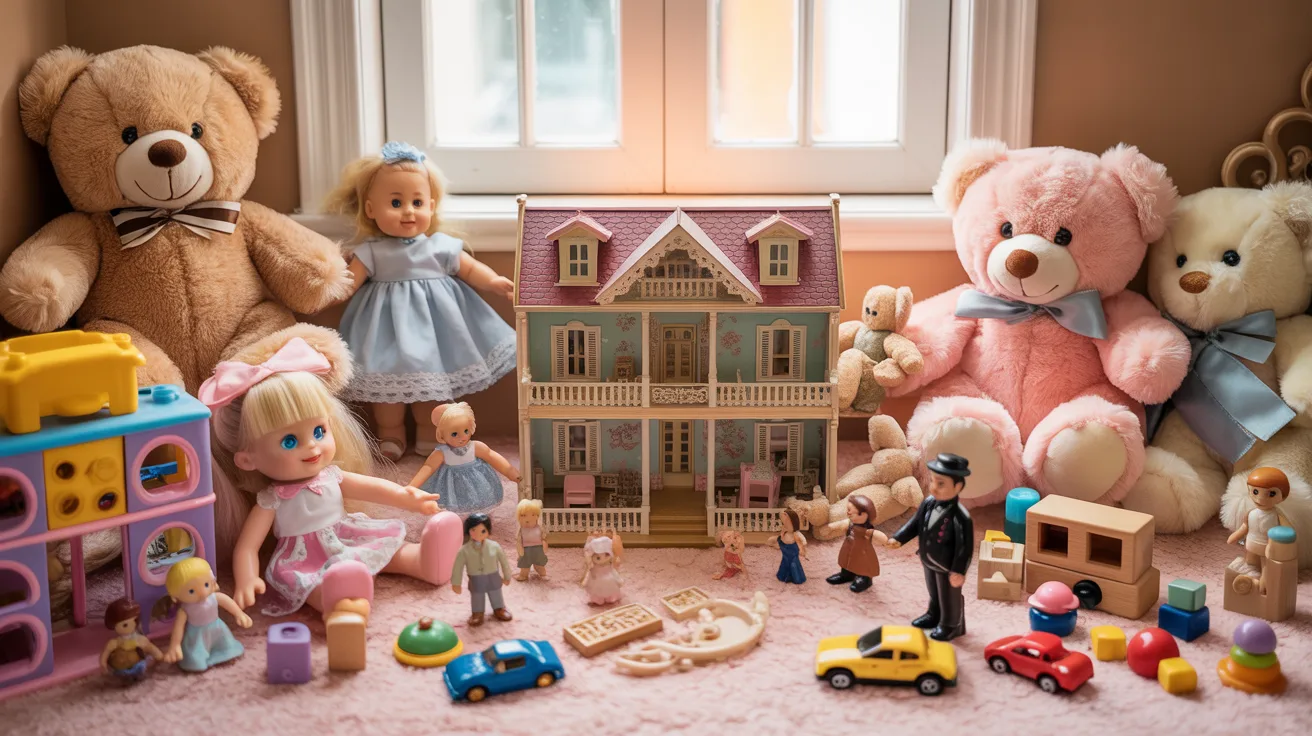
Walk past the play area at Hopscotch Lane on any given afternoon, and you’ll likely see a child deep in concentration, stacking blocks. Building, knocking down, building again. This scene has played out for literally centuries—archaeologists have found ancient building blocks in Egyptian tombs.
There’s a reason blocks have stuck around.
Developmental Benefits:
- Spatial reasoning: Understanding how shapes fit together, what makes structures stable
- Engineering basics: Cause and effect, balance, gravity—all learned through play
- Creativity: A block tower can be anything the child imagines
- Math concepts: Counting, sorting, patterns, fractions (even if they don’t know that’s what they’re learning)
Age Range: 18 months through elementary school—and honestly, adults enjoy them too
Why They Never Get Old: Every time a child plays with blocks, it’s different. Today’s castle becomes tomorrow’s rocket ship. As kids grow, their building becomes more sophisticated, but the blocks stay the same. That’s the magic.
Hopscotch Lane’s Block Collection:
Melissa & Doug 100-Piece Wooden Building Blocks ($32.99) This is the #1 seller, and for good reason. These blocks are exactly what blocks should be: smooth, precisely cut, various shapes and sizes. No paint, no fancy designs—just natural wood. Kids use these blocks every single day for years. One customer brought in his daughter’s set (bought in 2015) to show staff—still in perfect condition after nine years of daily use.
Plan Toys Construction Set ($45.99) Made from sustainable rubberwood (a byproduct of the latex industry). These blocks are slightly more expensive, but families who prioritize eco-friendly options love them. The wood has a beautiful grain, and the set includes some unique architectural shapes.
Grimm’s Rainbow Blocks ($65.99) These are beautiful. Hand-finished, naturally dyed in gorgeous colors. Yes, they’re pricier, but they’re also art. Families display these blocks when they’re not being played with. The curved shapes invite different building approaches than standard rectangular blocks.
Haba Wooden Blocks ($39.99) German quality, interesting shapes that add variety to building. These include curved pieces, columns, and arches that let kids create more complex structures.
Customer Story: “My kids have played with these blocks every single day for three years. Every. Single. Day. Best $30 spent.”
In-Store Benefit: There’s a play table where kids can test blocks before purchase. Seeing a child’s face light up when they figure out how to make an arch stay up? That’s why these blocks are stocked.
Toy #2: Baby Dolls
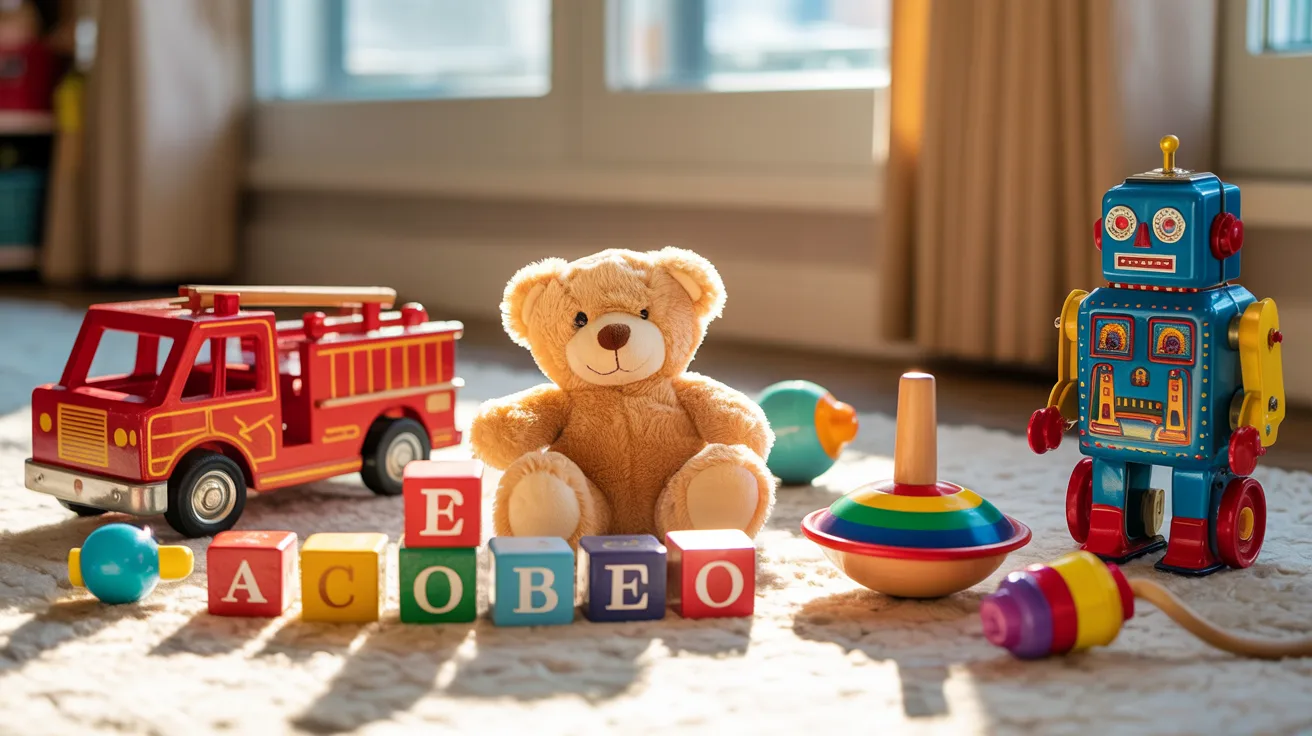
A four-year-old carefully wraps her baby doll in a blanket, shushing it softly. She’s mimicking what she’s seen, practicing what it means to care for someone. This type of play is as old as humanity itself.
History: Archaeological digs have uncovered dolls from ancient civilizations. The instinct to nurture, to care for a “baby,” is hardwired into humans.
Developmental Benefits:
- Empathy and nurturing: Learning to think about someone else’s needs
- Social-emotional skills: Processing feelings through play
- Language development: Constant conversation with and for the doll
- Life skills: Feeding, changing, soothing—all practiced safely
Age Range: 18 months through early elementary (and sometimes beyond)
Why They Never Get Old: The caregiving instinct is universal. Give a child a baby doll, and they’ll instinctively start caring for it. No instructions needed.
Hopscotch Lane’s Timeless Doll Picks:
Corolle Calin Baby Dolls ($39.99-$49.99) French quality, vanilla scent that’s become iconic, soft bodies perfect for hugging. These dolls have realistic proportions without being fussy. The eyes close, the body is cuddly, and children absolutely bond with them. Staff hear stories constantly about Corolle dolls that have been through everything—hospitals, moves, divorces—and remained the child’s steadfast companion.
Götz Baby Dolls ($89.99-$119.99) For families who want heirloom quality. These are the dolls that literally get passed down. Hand-painted features, realistic weight, incredible attention to detail. More expensive? Yes. Worth it? Ask the customers who bring in their own childhood Götz dolls to buy for their kids.
Waldorf-style Natural Dolls ($75-$150) Handmade, natural materials, simple faces that invite imagination. These dolls last generations with proper care. The simplicity is intentional—the doll can be happy, sad, sleeping, playing, depending on what the child needs.
Baby Stella Peach ($34.99) Tough enough for daily love, soft enough for constant cuddling, magnetic pacifier and bottle (genius), machine washable (seriously). This doll was designed with real childhood in mind.
Complete Care Sets: Bottles, diapers, carriers—everything needed for authentic nurturing play. Watching a child carefully feed their baby, burp it, put it to bed? That’s childhood at its finest.
Gift Packaging: Dolls are wrapped beautifully, making that first meeting between child and doll feel special.
Toy #3: Teddy Bears and Plush Animals
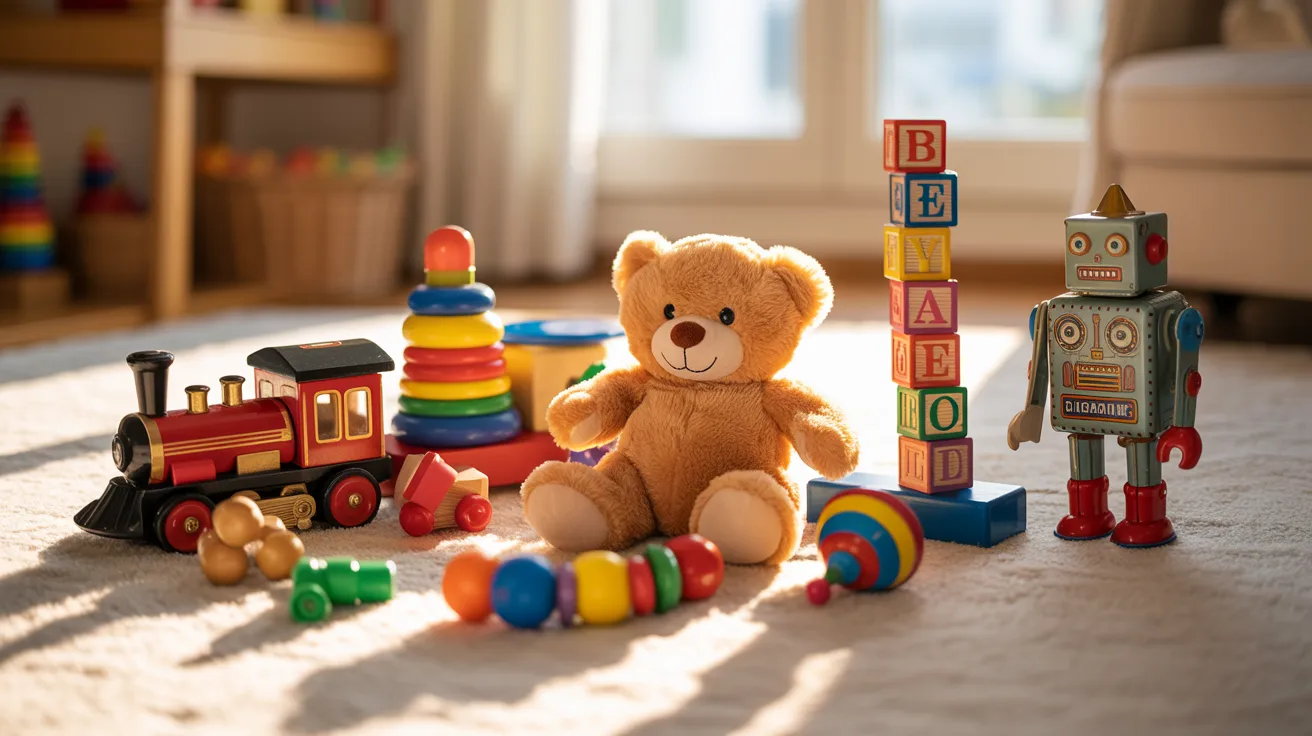
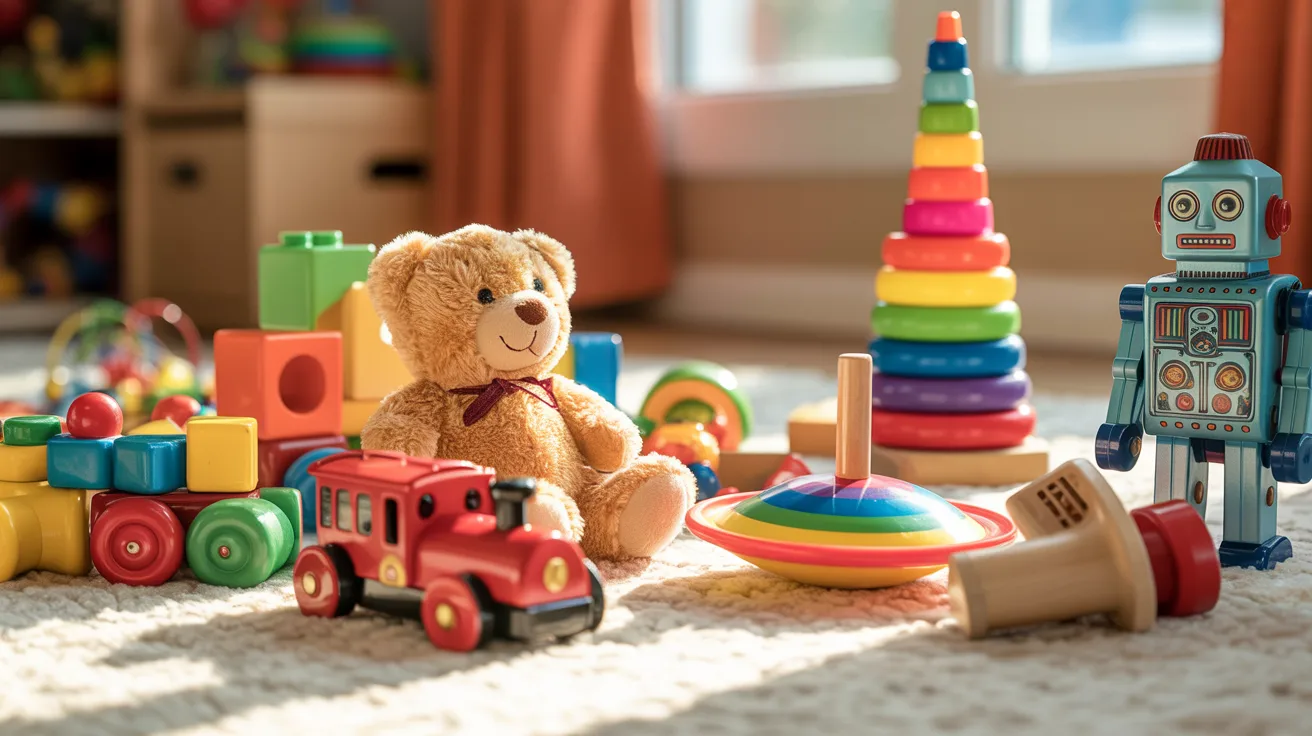
In 1902, President Theodore Roosevelt refused to shoot a bear cub during a hunting trip. A political cartoonist drew the scene, a toymaker was inspired, and the teddy bear was born. Over a century later, teddy bears remain one of the most beloved toys in the world.
History: The original teddy bear story is charming, but stuffed animals have been comforting children for far longer. There’s something about a soft companion that transcends culture and time.
Developmental Benefits:
- Comfort and security: A consistent friend when everything else feels uncertain
- Emotional expression: Kids tell their stuffed animals things they might not tell anyone else
- Companionship: Someone to talk to, sleep with, bring on adventures
Age Range: Birth through… honestly, adults keep stuffed animals too. No judgment.
Why They Never Get Old: Everyone needs something soft to hold. Simple as that.
Hopscotch Lane’s Plush Collection:
Jellycat Stuffed Animals ($18.99-$65.99) Ultra-soft, unique designs, quirky characters that have personality. These aren’t your standard teddy bears—there are bashful bunnies, silly sea creatures, and cuddly vegetables (yes, really). Why pay more for Jellycat? Touch one. The quality is unmistakable. These plush friends hold up to years of love.
Steiff Bears ($89.99-$295.99) The original teddy bear maker. These are collectibles, yes, but they’re also incredibly well-made friends. The button-in-ear is Steiff’s trademark. Families buy these knowing they’ll become family heirlooms.
Manhattan Toy Company ($24.99-$45.99) Whimsical, well-made, safety-tested within an inch of their lives. Great quality at accessible price points. The designs are playful and imaginative.
Folkmanis Puppets ($19.99-$39.99) Plush that encourages interactive play. These puppets invite storytelling, role-play, and communication. A teddy is great; a teddy that’s also a puppet? Even better.
Monogramming Service Available: A name embroidered on a bear makes it even more special. This is offered at Hopscotch Lane.
Customer Memory: “My daughter’s Jellycat bunny has been to seventeen states, two countries, and the emergency room three times (her, not the bunny). Seven years later, still her best friend.”
Toy #4: Play Kitchens and Food Sets
Children have been playing “house” forever. Modern play kitchens just formalize what kids naturally do—imitate the adults around them, work through daily routines, and practice life skills.
History: Miniature cooking sets date back centuries, but play kitchens really took off in the 1950s.
Developmental Benefits:
- Imaginative play: Creating scenarios, stories, roles
- Life skills practice: Following recipes (even pretend ones), cleaning up, organizing
- Social play: Playing restaurant, family dinner, cooking show
- Math: Measuring, counting, sorting, fractions (one half of the sandwich!)
Age Range: 2-8 years (with play complexity growing over time)
Why They Never Get Old: Everyone eats. Everyone cooks (or watches someone cook). This is universal.
Hopscotch Lane’s Kitchen Collection:
KidKraft Vintage Kitchen ($149.99) Beautiful design that doesn’t look like a garish plastic toy. Built to survive years of play. Working knobs, opening doors, plenty of storage. Yes, it’s an investment, but it’s the kind of thing that serves multiple children and still looks great.
Melissa & Doug Wooden Play Food ($12.99-$45.99) Realistic details, satisfying weight, pieces that actually look like food. The magnetic cutting food is particularly clever—kids can “cut” the apple, hear the satisfying sound, then stick it back together. Quality wood that holds up to years of pretend meals.
Plan Toys Kitchen Sets ($89.99-$179.99) Sustainable wood, modern aesthetic that adults actually like looking at. These kitchens fit into your home without screaming “toy.”
Hape Wooden Dishes and Cookware ($29.99-$59.99) Pots, pans, plates, utensils—all well-made wood and metal. These pieces have weight and quality.
Bundle Deals: Kitchen + essential food set packages save 15%. Staff can help put together the perfect starter kitchen.
Assembly Service: For major pieces like kitchens, assembly before delivery can be arranged.
Staff Pick: The combination most families love is the KidKraft kitchen with Melissa & Doug food sets. It’s the sweet spot of quality and play value.
Toy #5: Train Sets
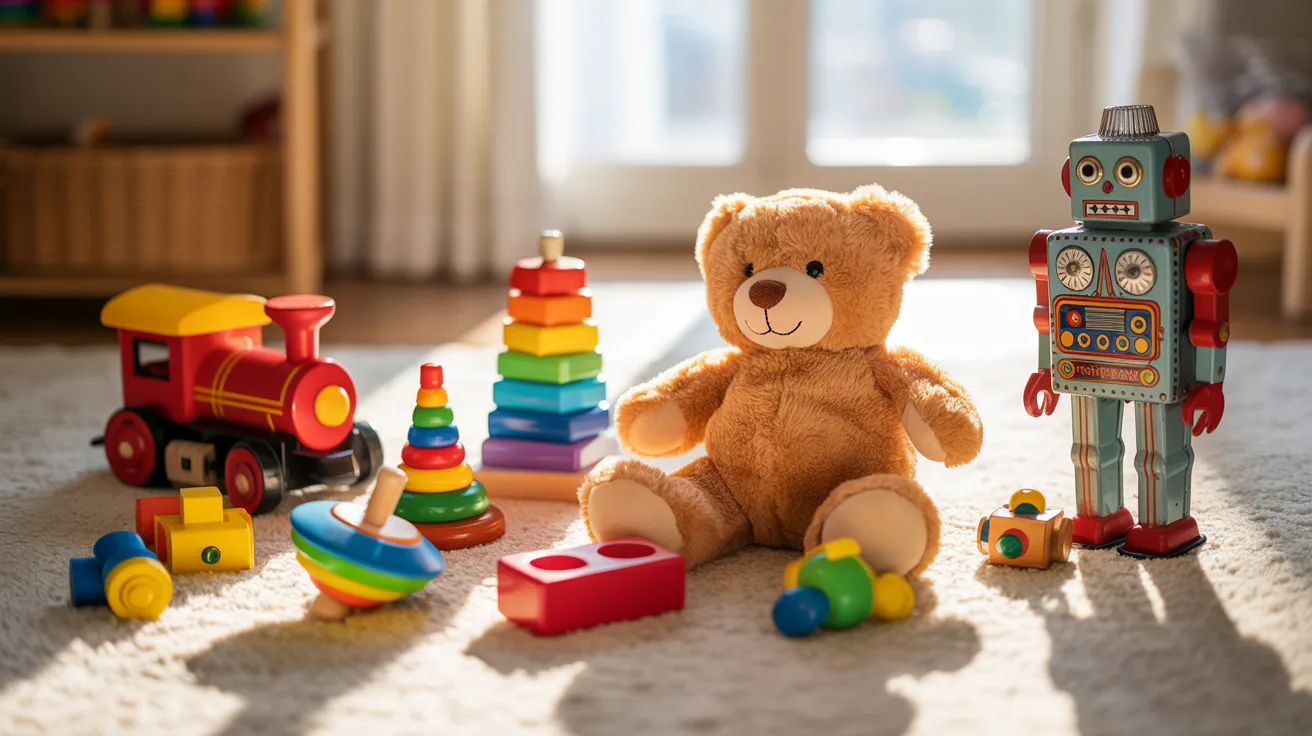
There’s something mesmerizing about trains. The way they connect, the clicking of track, the loops and bridges and tunnels. Kids get absorbed in train play for hours.
History: Toy trains emerged with real trains in the 19th century. Thomas the Tank Engine brought train play to new generations starting in 1945.
Developmental Benefits:
- Cause and effect: Push the train, it goes; connect the tracks, it follows the path
- Planning and engineering: Designing layouts requires thinking ahead
- Fine motor skills: Connecting pieces, guiding trains
- Narrative play: Thomas has taught generations that trains can have personalities
Age Range: 2-10+ years (and many adults have elaborate model train setups)
Why They Never Get Old: Movement fascinates. Connection fascinates. Building paths and making things go where you want—that’s satisfying at any age.
Hopscotch Lane’s Train Selection:
Brio Wooden Railway ($39.99-$189.99) Swedish quality, compatible with other brands, incredibly durable. This is the top recommendation. The track pieces click together satisfyingly, stay connected during play, and can be configured infinite ways. Brio sets bought in 1990 still work perfectly today.
Melissa & Doug Train Sets ($29.99-$69.99) Great starter option. The price point is accessible, quality is solid, and kids can expand over time.
Thomas & Friends Wooden Railway ($15.99-$89.99) For Thomas fans (and there are many). These work with Brio track, so families can mix and match.
Hape Railway Sets ($34.99-$149.99) Eco-friendly bamboo, modern designs, innovative pieces like recorded message stations and solar-powered engines.
In-Store Display: There’s a complete train setup that kids can play with. Seeing it in action helps families understand what they’re buying. Staff can help plan layouts based on space available.
Storage Solutions: Train collections grow (they always do). Storage options that keep track organized: $29.99-$59.99
Why Wooden Beats Plastic: Wooden trains have weight, substance, quality. Plastic train sets break, crack, and look cheap. Wooden trains last.
Toy #6: Art Supplies (Crayons, Paints, Clay)
Children have always created art. Give a child any mark-making tool and a surface, and they’ll create. It’s instinctive.
History: Cave paintings prove that making marks is fundamental human behavior. Children’s art supplies have just formalized this instinct.
Developmental Benefits:
- Fine motor skills: Holding crayons, controlling brushes, manipulating clay
- Self-expression: Communicating feelings and ideas through art
- Problem-solving: How do I make the color I want? How do I get this to look how I imagine?
- Building skills and seeing improvement: Few things are as satisfying as watching your art get better
Age Range: 2+ years (with age-appropriate materials)
Why They Never Get Old: Infinite creative possibilities. No two art sessions are ever the same. The blank page is always an invitation.
Hopscotch Lane’s Art Supply Corner:
Stockmar Beeswax Crayons ($18.99-$34.99) Waldorf-approved, beautiful colors, incredibly smooth. These aren’t your standard crayons. The color payoff is rich, they blend beautifully, and they smell amazing (yes, smell matters).
Melissa & Doug Easel ($79.99) Double-sided, adjustable height, grows with the child from toddler to elementary. Paper rolls fit perfectly, storage bins keep supplies organized.
Faber-Castell Art Sets ($24.99-$79.99) Artist-quality materials at kid-friendly prices. The colored pencils, markers, and watercolors are vibrant and reliable.
Eco-Kids Natural Paints ($12.99-$28.99) Safe (actually safe—you could eat these, though that’s not recommended), non-toxic, vibrant colors. Parents feel good about these paints.
Creativity for Kids Craft Kits ($19.99-$44.99) Guided projects that build skills. Includes everything needed, clear instructions, creates confidence.
Art Supply Starter Kits: Curated by age, taking the guesswork out. Everything needed to get started: $29.99-$79.99
Monthly Art Workshops: Free with any art supply purchase. Kids learn techniques, get inspiration, create together. Check schedule in-store.
Storage and Organization: Keeping art supplies accessible but organized matters. Caddies, bins, shelves—all available.
Toy #7: Puzzles
In the 1760s, a London mapmaker mounted a map on wood and cut it into pieces to help teach geography. The jigsaw puzzle was born. Almost three centuries later, puzzles remain popular.
History: Puzzles were originally educational tools. They still are, but now they’re also recognized as valuable play.
Developmental Benefits:
- Problem-solving: Figure out which piece goes where
- Patience and persistence: Keep trying until it fits
- Spatial awareness: Understanding how shapes relate to each other
- Memory: Remembering what you’re looking for, where gaps are
- Completion satisfaction: Finishing a puzzle feels good
Age Range: 18 months through adult (puzzles for every level)
Why They Never Get Old: The perfect puzzle is challenging but doable. Too easy is boring; too hard is frustrating. But the right puzzle? That’s satisfying.
Hopscotch Lane’s Puzzle Collection:
Melissa & Doug Wooden Puzzles ($8.99-$24.99) Chunky pieces for little hands, beautiful illustrations, sturdy construction. These are the best first puzzles. The pieces have knobs or are thick enough for toddlers to grasp. Images are clear and appealing.
Ravensburger Puzzles ($12.99-$39.99) The gold standard. Pieces fit perfectly (really, the precision is remarkable), colors are vivid, no puzzle dust. Once you do a Ravensburger puzzle, other brands feel inferior.
eeBoo Puzzles ($14.99-$29.99) Beautiful art, recycled materials, diverse images. These puzzles are pretty enough to frame when completed.
Hape Wooden Puzzles ($16.99-$32.99) Creative shapes, themes beyond the standard animals and vehicles, quality wood.
Progression Guide:
- 18 months-2 years: 3-8 chunky piece puzzles
- 2-3 years: 12-24 piece puzzles
- 3-4 years: 24-48 piece puzzles
- 4-5 years: 48-100 piece puzzles
- 5+ years: 100+ pieces and up
Staff can help match puzzles to current skill level and suggest next steps.
Puzzle Exchange Program: Trade completed puzzles with other families through Hopscotch Lane. Keep things fresh without buying constantly.
Storage Options: Puzzle organizers and frames available: $9.99-$34.99
Toy #8: Balls (All Kinds)
Balls might be the oldest toys in human history. Archaeological sites around the world have uncovered ancient balls made from various materials. Turns out, throwing, catching, kicking, and rolling things is universally fun.
History: Literally prehistoric. Humans have been playing with balls forever.
Developmental Benefits:
- Gross motor skills: Throwing, catching, kicking all develop coordination
- Coordination: Eye-hand, eye-foot, timing, spatial awareness
- Social play: Most ball games involve other people
- Physical fitness: Active play that doesn’t feel like exercise
Age Range: 6 months through forever (seriously, adults play with balls too)
Why They Never Get Old: Balls are simple and satisfying. Roll it, throw it, kick it, bounce it. Every age finds ways to play with balls.
Hopscotch Lane’s Ball Selection:
Soft Baby Balls ($8.99-$12.99) Safe for youngest players, easy to grasp, gentle for indoor use. These get gripped, chewed, tossed, and rolled by babies learning about objects.
Crocodile Creek Playball ($11.99-$19.99) Artistic designs (not just sports themes—planets, animals, mandalas), multiple sizes (5″, 7″, 10″), quality rubber that bounces true.
Traditional Playground Balls ($9.99-$16.99) Kickball, dodgeball, four-square. The classic rubber balls that defined childhood for generations.
Sensory Balls ($8.99-$16.99) Textured, squeaky, interesting to touch. Great for babies and kids with sensory needs.
Sport-Specific ($14.99-$34.99) Soccer, basketball, baseball, football for kids getting serious about sports. Quality balls appropriate for learning proper technique.
Indoor Options: Soft foam balls safe for living room play: $8.99-$14.99
What to Keep in Your Ball Basket:
- One soft ball (babies/indoor)
- One medium rubber ball (classic play)
- One sport ball (based on interest)
- One specialty ball (textured or unique)
Toy #9: Dress-Up Clothes and Costumes
Children have always loved pretending to be someone else. Dress-up formalizes this instinct with clothes and accessories that invite role-play.
History: As long as there have been clothes, children have been playing dress-up.
Developmental Benefits:
- Imaginative play: Becoming a character, creating scenarios
- Identity exploration: Trying on different roles and personas
- Building self-assurance: Pretending to be brave makes you feel brave
- Social skills: Role-playing interactions, practicing conversations
Age Range: 2-10 years (and honestly, adults enjoy costume parties too)
Why They Never Get Old: Fantasy and role-play are timeless. Every generation finds something they want to pretend to be.
Hopscotch Lane’s Dress-Up Department:
Sarah’s Silks ($18.99-$45.99) Flowing, open-ended play silks that can become capes, skirts, fort walls, rivers, whatever. Beloved by Waldorf families but appreciated by everyone. The silk is high-quality, colors are gorgeous, and possibilities are endless.
Great Pretenders Costumes ($34.99-$54.99) Quality construction, comfortable fit, built for actual play (not just wearing once). The seams hold up, the fabrics breathe, details are thoughtful.
Melissa & Doug Role Play Sets ($19.99-$39.99) Doctor, chef, construction worker, veterinarian. These sets come with tools and accessories for authentic pretend. The medical kit is particularly well-done.
Little Adventures Costumes ($39.99-$49.99) Machine washable princess dresses. Finally. These are the first princess dresses built for real play. They go in the washing machine and come out fine.
Gender-Neutral Options: Capes, tunics, accessories for any child regardless of interests: $19.99-$44.99
Mix and Match Pieces: Build a versatile dress-up wardrobe rather than single-use costumes. Pieces work together in different combinations.
Accessories Wall: Hats, shoes, jewelry, props—all the finishing touches: $5.99-$24.99
Storage Trunks: Keep costumes organized and accessible. Beautiful options: $39.99-$79.99
Seasonal Specials: Halloween costumes available year-round, plus holiday themes.
Customer Favorite: The Sarah’s Silks cape in rainbow colors. Kids use this daily for years.
Toy #10: Board Games (Classic Family Games)
Board games are ancient—archaeologists have found game boards from 3500 BCE. Humans have always loved games.
History: From ancient Egypt’s Senet to modern classics, games have entertained families for millennia.
Developmental Benefits:
- Strategic thinking: Planning moves, predicting outcomes
- Social skills: Taking turns, playing together, communicating
- Following rules: Understanding and accepting structure
- Winning and losing gracefully: Arguably one of the most valuable skills learned through games
Age Range: 3+ (with age-appropriate games)
Why They Never Get Old: Family bonding and fun. Game nights create memories. Plus, games adapt—the same game played at five versus nine creates different experiences.
Hopscotch Lane’s Game Library:
First Games (Ages 3-5):
- Candy Land ($12.99): No reading required, color matching, simple racing
- Chutes & Ladders ($14.99): Counting, simple strategy, accepting setbacks
Strategy Introduction (Ages 5-7):
- Sequence for Kids ($19.99): Pattern making, planning ahead, matching
Cooperative Games (Ages 4+):
- Hoot Owl Hoot ($19.99): Work together to get owls home before sun comes up. Learning that games don’t require one winner.
Classic Standbys:
- Checkers ($14.99): Ancient strategy game, easy to learn, lifetime to master
- Chess ($24.99-$49.99): The ultimate strategy game
- Dominoes ($12.99): Versatile, multiple games possible
Try Before You Buy: Monthly game nights at Hopscotch Lane (first Friday of each month). Try games before committing. Learn new games. Meet other families.
Staff Recommendations by Age: Staff members play-test games constantly and can recommend perfect matches based on your family.
Game Night Packages: Multiple games bundled at a discount for families starting game night traditions.
Why Classic Games Last: They’re balanced, well-tested, and prove themselves generation after generation. Trendy games fade; classics persist.
The Common Thread: Why These Toys Last
Looking at these ten toys, patterns emerge:
All encourage imagination. None of these toys do the playing for the child. Each requires the child to bring ideas, stories, and creativity. That’s why they don’t get boring.
All grow with the child. A two-year-old plays with blocks differently than a seven-year-old, but both play with blocks. The toy stays the same; the play evolves.
All facilitate human connection. These are toys for playing together, sharing, building relationships. Even solo play with these toys often leads to showing someone what you made.
All are “offline” experiences. No screens, no apps, no updates. Just hands-on, present play.
Quality construction ensures longevity—the Hopscotch Lane promise. These toys survive real childhood because they’re made to last. This isn’t just about durability; it’s about respect for families and the planet.
Sustainability matters. Classic toys reduce waste. One quality wooden block set serves multiple children for decades. One plastic toy might last a month. The math is simple.
Value proposition. Yes, quality toys cost more upfront. But cost-per-play? Quality wins every time. A $40 wooden train set played with daily for six years versus a $15 plastic set that breaks in three months? The quality toy is cheaper.
These toys get passed down. Customer after customer mentions inheriting toys or passing toys down. That’s the real test of a toy’s worth.
The Hopscotch Lane Difference
Why curate instead of carrying everything? The toy industry churns out thousands of new toys annually. Most are garbage—poorly made, quickly forgotten, destined for landfills. Hopscotch Lane rejects 95% of what’s available.
Testing process: Staff don’t just look at toys; they watch children play with them. Which toys get ignored after a week? Which get played with constantly? The answers determine what gets stocked.
Lifetime support: Questions about a toy purchased five years ago? Staff are here. Need a replacement part? They’ll help find it. Want advice about the next step? They’ve got answers.
Repair services when possible: Some toys can be fixed rather than replaced. Staff will try.
Trade-in program: Outgrown quality toys? Bring them in for store credit. Another family will love them.
Conclusion
Investing in classics is investing in childhood. These toys will be played with, not abandoned after a week. These are the toys children remember years later.
It Starts With One Toy:
Your next purchase can be different. Instead of another piece of plastic that’ll break, choose something that lasts. Touch wood instead of plastic. Feel the weight of quality. See craftsmanship instead of mass production. Notice open-ended instead of prescribed.
Ready to Start?
Visit Hopscotch Lane. See these toys in person. Let your child hold them, play with them, connect with them. The difference is tangible.
- Visit the Store: Touch, hold, and test quality
- Bring Your Children: Let them feel the difference
- Gift Registry: Available for birthdays and holidays
- Subscribe: “Toy of the Month” program for building collections gradually
- Join the Newsletter: Sales on classics, new arrivals, play tips
Special Offer: “Classic Collection” discount—buy 3 or more classic toys, get 15% off entire purchase.
Follow @hopscotchlane for daily play inspiration.
Because some things improve with time, not trends. Build a toy collection that becomes part of your family story.
Visit Hopscotch Lane—where quality childhood is still possible.