
Introduction
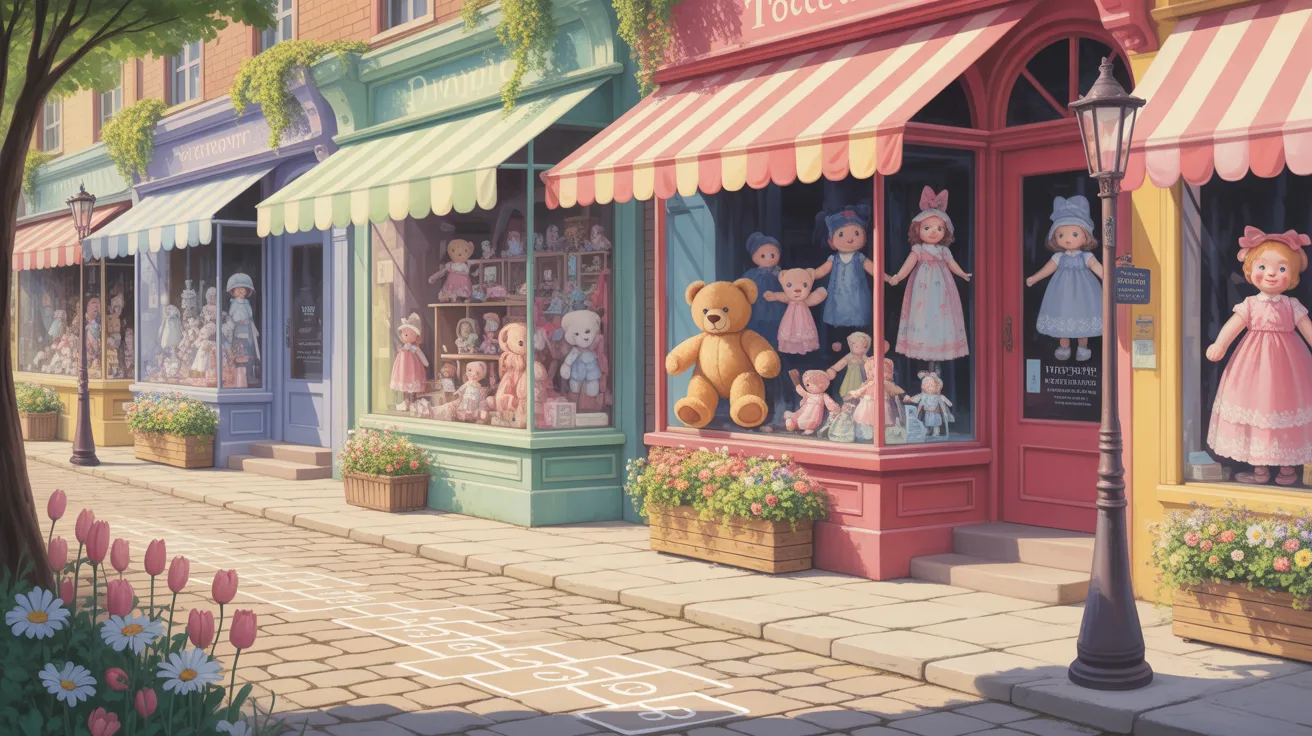
Sarah walks into Hopscotch Lane carrying her daughter Emma, who clutches a well-worn baby doll with such tenderness that you’d think it was made of spun glass. “She won’t go anywhere without Lucy,” Sarah explains with a knowing smile. “Preschool, doctor’s visits, even the grocery store—Lucy comes along.”
This scene plays out in the store dozens of times each week, and it never gets old. There’s something profoundly moving about watching a child’s relationship with their beloved doll—the way they cradle it, whisper secrets to it, and insist it needs a seat at the dinner table.
But beyond the sweetness of these moments lies something far more significant. The attachment between a child and their favorite doll isn’t just adorable; it’s developmental gold. Research consistently shows that comfort objects, particularly dolls, play a crucial role in emotional intelligence, social development, and psychological wellbeing.
At Hopscotch Lane, thousands of these special relationships have bloomed over the years. Shy children gain strength through caring for their dolls. Anxious toddlers find comfort during difficult transitions. Parents share stories about how a beloved doll helped their child through everything from starting school to welcoming a new sibling.
In this article, you’ll find the science and psychology behind why every child benefits from having a favorite doll—and how to choose the perfect companion for the special child in your life.
The Psychology of Attachment
In the 1950s, British psychoanalyst Donald Winnicott introduced the concept of “transitional objects”—items that help children bridge the gap between complete dependence on their parents and growing independence. These objects, often soft toys or dolls, become what Winnicott called “the first not-me possession.”
A favorite doll serves as a portable source of comfort and security. When Mom or Dad can’t be there, the doll can. It’s a tangible reminder of home, love, and safety that a child can carry with them into the wider world.
The attachment typically begins between 8 and 12 months of age, though it can start earlier or later. Around this time, babies begin to understand object permanence—the concept that things continue to exist even when out of sight. This developmental milestone coincides with separation anxiety, and a comfort doll can ease this challenging transition.
What’s happening developmentally is fascinating: the child is learning to self-soothe, developing emotional regulation skills that will serve them throughout life. When they cuddle their doll during a stressful moment, they’re actively practicing calming techniques.
At Hopscotch Lane, a conversation with Dr. Michelle Torres, a child psychologist who specializes in early childhood development, shed light on this. She explained: “The relationship a child develops with a comfort doll is actually their first practice at maintaining a relationship during separation. It’s incredibly important work they’re doing, even if it looks like simple play.”
The good news for parents worried about their child’s attachment? This behavior is completely normal and healthy. Most children naturally outgrow their intense attachment to comfort objects between ages 4 and 7, though many maintain affection for special toys well into later childhood. Some adults still have their childhood dolls—and there’s absolutely nothing wrong with that.
However, if a child’s attachment seems to interfere with daily activities, social interactions, or development past age 7 or 8, it may be worth consulting with a pediatrician or child psychologist. But for the vast majority of children, that beloved doll is doing exactly what it should: providing comfort, security, and a safe space to practice growing up.
Last month, a mother shared a beautiful story at Hopscotch Lane. Her son had been terrified of overnight visits to grandma’s house until they established a routine where his favorite doll “went to sleep” first, modeling bravery. Within weeks, the anxiety disappeared. That doll became a bridge to independence.
Emotional Intelligence Development
Walk through any preschool during free play time, and you’ll likely see children engaged in doll play—feeding their babies, rocking them to sleep, scolding them for misbehavior, or comforting them when they’re “sad.” What you’re witnessing is emotional intelligence in action.
When children care for dolls, they’re practicing empathy—the ability to understand and share the feelings of another. This isn’t just imaginative play; it’s essential training for navigating human relationships throughout life.
Research from the University of Cambridge used neuroimaging to study children engaged in doll play. The results were striking: playing with dolls activated brain regions associated with social information processing and empathy, even when children played alone. Tablet games, by contrast, did not activate these same regions.
At Hopscotch Lane, we see this emotional learning unfold daily. A four-year-old carefully bandages her doll’s “hurt arm” with the same gentle care her mother showed when she scraped her knee. A three-year-old rocks his baby doll, mimicking the soothing motions his father uses at bedtime. These children are building emotional vocabularies and learning to recognize, name, and respond to feelings.
Doll play also provides a safe space for children to process complex emotions. When a child is angry, they might express that through their doll—perhaps the doll is having a tantrum. This externalization allows them to explore difficult feelings at a safe distance. Similarly, when facing fears about an upcoming event like starting school, children often play out scenarios with their dolls, working through anxieties in a controlled way.
Recommendation: Dolls That Encourage Emotional Connection
At Hopscotch Lane, dolls are carefully selected to support this crucial emotional development:
Corolle Mon Premier Baby Dolls ($29.99-$39.99): These French-made dolls are designed specifically for nurturing play. Their soft bodies invite cuddling, and their vanilla scent creates a multi-sensory bonding experience. The simple, sweet facial features allow children to project various emotions onto the doll—is baby happy, sad, or sleepy? The child decides. Available in sizes from 12″ (perfect for toddlers) to 17″ (ideal for preschoolers).
Götz Precious Day Dolls ($89.99-$119.99): These German-crafted dolls feature incredibly realistic details—eyes that open and close, poseable bodies, and lifelike proportions. The realism invites more sophisticated nurturing play from children ages 4 and up. A kindergarten teacher who shops at Hopscotch Lane keeps a Götz doll in her classroom specifically for children who need extra emotional support during the day.
Baby Stella Peach ($34.99): This doll has become legendary among pediatric therapists for its effectiveness in helping children develop empathy and caregiving skills. The soft, huggable body and magnetic pacifier make it perfect for children who want to “really” care for their baby. Machine washable—because beloved dolls need to be cleaned often!
Parents often ask which doll will become their child’s favorite. The truth is, chemistry can’t be predicted. But dolls designed for nurturing play, with soft bodies that invite cuddling and simple features that allow for emotional projection, tend to become the most beloved companions.
Social Skills and Communication
Three-year-old Mason sits on the floor of the play area at Hopscotch Lane, having an animated conversation with his doll. He’s explaining the rules of the store, listing what they’ll buy, and discussing what they’ll make for dinner when they get home. His vocabulary is impressive, his sentence structure complex, and his social understanding evident. This is language development and social learning in action.
Doll play is one of the most language-rich activities young children engage in. Unlike passive entertainment, doll play requires constant narration, dialogue, and storytelling. Children talk to their dolls, speak for their dolls, and create elaborate scenarios that exercise their verbal skills.
Research shows that children who regularly engage in pretend play with dolls score higher on language development assessments than those who don’t. They use more complex sentences, demonstrate larger vocabularies, and show more sophisticated understanding of narrative structure.
But the benefits extend beyond vocabulary. Through doll play, children practice social scripts—the patterns of interaction that govern human relationships. They rehearse conversations, experiment with tone of voice, and work through the turn-taking that’s essential to communication.
Watch a four-year-old playing “school” with their dolls, and you’ll see them practicing the role of teacher—giving instructions, offering praise, and managing a classroom. This kind of role-play helps children understand different perspectives and social positions. They’re literally walking a mile in someone else’s shoes (or standing in someone else’s heels, as the case may be).
Doll play also helps children with pragmatic language—the social use of language. They learn when to speak loudly or softly, how to comfort someone who’s upset, how to express excitement appropriately. These subtle aspects of communication are difficult to teach directly but emerge naturally through pretend play.
For children who struggle with social interactions, dolls can be particularly valuable. A child with social anxiety can practice conversations in the safety of their room before trying them in the real world. A child on the autism spectrum can use dolls to understand and rehearse social scenarios they find confusing. At Hopscotch Lane, we’ve had speech therapists, occupational therapists, and special education teachers shop for specific dolls to use in therapeutic contexts.
Building Narrative Skills
When children create stories with their dolls, they’re developing narrative competence—the ability to understand and create stories with beginnings, middles, and ends. This skill is foundational to reading comprehension, writing ability, and even mathematical problem-solving.
The baby doll wakes up, gets dressed, eats breakfast, goes to the park, comes home, has dinner, takes a bath, and goes to bed. This simple sequence is actually quite sophisticated cognitively. The child is organizing events chronologically, understanding cause and effect, and creating a coherent narrative arc.
At Hopscotch Lane, we stock dolls that come with accessories specifically to encourage this kind of expanded play:
Waldorf-Style Dolls from Our Artisan Collection ($75-$150): These handmade dolls feature simple, peaceful facial expressions that invite children to project emotions and create narratives. The minimalist design is intentional—it leaves room for imagination. One parent told us her daughter’s Waldorf doll has been, in various play sessions, a baby, a sister, a friend, a student, and even a puppy. The doll’s simplicity allows for this flexibility.
Baby Stella accessories: We carry the complete line of Baby Stella care sets—from feeding and changing sets ($19.99) to strollers ($49.99) and high chairs ($39.99). These accessories dramatically extend play scenarios, giving children props for elaborate narratives.
The more complex the play scenario, the more language practice occurring. And unlike screen-based entertainment, this play requires the child to generate all the dialogue, narration, and sound effects themselves. It’s a full-body, full-brain workout.
Comfort During Transitions and Stress
If you’ve ever watched a toddler clutch their favorite doll while facing something scary—a doctor’s appointment, the first day of daycare, a thunderstorm—you’ve witnessed the power of comfort objects during stressful times.
Life is full of transitions, and childhood especially so. Starting preschool. Welcoming a new sibling. Moving to a new home. Dealing with parents’ divorce. Recovering from illness or injury. Losing a grandparent. These experiences can overwhelm a child’s still-developing emotional regulation systems.
A beloved doll provides continuity during change. While everything else feels unfamiliar or scary, the doll remains constant. It smells the same, feels the same, and offers the same comfort it always has. In psychological terms, it’s an anchor of security in turbulent waters.
Dr. Rebecca Chan, a pediatric psychologist who works with Hopscotch Lane, explains: “Comfort objects work because they’re both transitional and consistent. They help the child transition to new circumstances while remaining a constant, familiar presence. It’s really quite elegant developmentally.”
Real Story from the Hopscotch Lane Community
Last year, Emily, a regular customer, shared this story: Her daughter Sophia was scheduled for a brief hospital stay—nothing serious, but understandably scary for a five-year-old. Sophia’s beloved Corolle doll, named “Baby Rose,” went everywhere with her.
Emily had an idea. The night before the hospital visit, they played “hospital” with Baby Rose. They packed her a tiny hospital bag, explained what would happen (in terms a doll would understand), and even gave Baby Rose a pretend IV using a straw and tape.
The next day, Sophia arrived at the hospital clutching Baby Rose. When the nurses explained the procedures, Sophia listened calmly—she’d already practiced with her doll. When the IV was placed, Sophia asked if Baby Rose could have one too. The nurses wrapped a piece of medical tape around the doll’s arm, and Sophia relaxed completely.
“I honestly don’t know if we would have gotten through that experience without Baby Rose,” Emily told us later. “She transformed my daughter’s fear into caregiving. Instead of being a scared patient, Sophia became a protective mother making sure her baby was okay.”
Choosing Comfort Dolls for Specific Transitions
Different dolls serve different transitional needs:
For welcoming a new sibling ($29.99-$89.99): Realistic baby dolls help older children process feelings about the new baby and practice gentle caregiving. Götz baby dolls are particularly popular for this purpose because they’re sized and weighted similarly to real newborns.
For starting school ($34.99-$49.99): Slightly smaller dolls (12-14″) that fit easily in backpacks provide comfort without being cumbersome. The Baby Stella dolls are perfect for this—they’re soft, huggable, and washable. Some parents even buy two identical dolls—one for home, one for school—to ensure the comfort is always available.
For medical situations ($29.99-$119.99): Dolls with realistic features help children process and prepare for medical experiences. We’ve had child life specialists from local hospitals shop with us for dolls to use in pre-procedure preparation.
For general anxiety and stress ($75-$150): Soft-bodied dolls with simple, peaceful features—like the Waldorf collection—provide the most universal comfort. The natural materials (cotton, wool) and gentle faces have a calming effect.
Complimentary gift wrapping is offered at Hopscotch Lane, including a note “from” the doll to the child, which many families find helps establish that special bond right from the start. Hundreds of these notes have been written over the years: “Dear Emma, I can’t wait to be your friend and go on adventures with you. Love, Lucy.”
Building Responsibility and Caregiving Skills
“Mom, my baby needs her bottle!” Four-year-old Jordan rushes to Hopscotch Lane’s doll accessory section with purpose. His baby doll has been “crying” (according to Jordan), and he’s determined to fix the problem. This might look like simple play, but it’s actually sophisticated problem-solving and the beginning of personal responsibility.
When children care for dolls, they’re learning to think beyond their own immediate needs. They’re practicing perspective-taking: “My baby is sad, so I need to help her feel better.” This is the foundation of caregiving, empathy, and eventually, mature relationships.
The lessons start simple:
- Baby is “hungry” → Child feeds the doll → Child learns that actions meet needs
- Baby is “tired” → Child puts doll to bed → Child learns soothing and routine
- Baby is “messy” → Child changes diaper → Child learns cleanliness and care
But these simple actions teach complex concepts: cause and effect, responsibility, nurturing, patience, and the reward of meeting someone else’s needs.
Research from the University of Virginia found that children who regularly engaged in nurturing play with dolls showed higher levels of prosocial behavior—helping, sharing, and showing concern for others—compared to children who didn’t. The effect was particularly pronounced in children ages 3-5.
Age-Appropriate Caregiving Activities
At Hopscotch Lane, parents can find dolls and accessories that match their child’s developmental stage and caregiving capabilities:
Ages 18 months – 2 years:
- Simple baby dolls with soft bodies
- Basic activities: hugging, rocking, pretend feeding
- Recommended: Corolle Mon Doudou dolls ($29.99) – ultra-soft, simple, perfect first babies
Ages 2-3 years:
- Baby dolls with some realistic features
- Activities: feeding with bottle, simple dressing, putting to bed
- Recommended: Baby Stella ($34.99) with starter accessories set ($24.99)
- Why it works: Magnetic pacifier and bottle satisfy the desire for “real” caregiving without frustration
Ages 3-4 years:
- More detailed baby dolls
- Activities: diaper changing, more complex dressing, bathing, taking on walks
- Recommended: Corolle Bébé Calin dolls ($39.99-$49.99) with care accessories
- Available accessories: Bath sets ($24.99), strollers ($59.99), high chairs ($39.99), changing tables ($44.99)
Ages 4-5 years:
- Realistic baby dolls with multiple features
- Activities: full care routines, role-playing parenting scenarios, teaching the “baby” things
- Recommended: Götz Baby dolls ($89.99-$119.99)
- Why upgrade: Realistic weight, proportions, and features support more sophisticated nurturing play
Ages 5+ years:
- Transition to dolls that represent children or adults (18″ dolls, fashion dolls)
- Activities: teaching scenarios, friendship play, complex storytelling
- Recommended: Our Generation 18″ dolls ($39.99-$79.99) with extensive accessory options
Building Care Routines
One of the most valuable things doll play teaches is the importance of routines. Children create elaborate care schedules for their dolls—morning routines, bedtime routines, daily schedules. This practice translates directly to self-care skills.
A parent shared this story: Her son was resistant to his own bedtime routine until he started putting his baby doll to bed each night first. The doll’s routine (bath, pajamas, story, song, sleep) became the model for his own. Within two weeks, bedtime battles had completely disappeared.
At Hopscotch Lane, the “Complete Care Collection” bundles support routine-based play:
Baby Care Starter Set ($79.99): Includes baby doll, bottle, pacifier, blanket, and board book about bedtime routines
Toddler Care Expanded Set ($129.99): Adds diaper bag, changing pad, extra outfits, and stroller
Preschooler Complete Care ($189.99): The works—doll, furniture (high chair or stroller), complete wardrobe, care accessories, and activity sets
These bundles take the guesswork out of building a caregiving play experience, and the savings versus buying items separately is significant.
The Responsibility Bonus
Here’s something wonderful that happens: children who care for dolls often begin to show more responsibility in other areas. They remember to hang up their coats because they’ve practiced hanging up doll clothes. They’re gentler with pets because they’ve practiced gentle handling with their dolls. They’re better at following multi-step directions because they’ve created and followed care routines for their babies.
It’s not magic—it’s practice. And dolls provide a low-stakes way to practice skills that matter throughout life.
Choosing the Right Comfort Doll at Hopscotch Lane
“How do I know which doll will become my child’s favorite?” This is the question heard most often at Hopscotch Lane, and after years of helping families, some patterns have emerged.
The truth is, there’s some chemistry involved that can’t be predicted. But after helping thousands of families find perfect doll matches, some key factors have been identified that increase the likelihood of a lasting bond.
Age-Appropriate Features
The right doll for a toddler is very different from the right doll for a kindergartener:
For Ages 0-18 months:
- Ultra-soft, no hard parts
- Simple features, minimal details
- Completely washable
- Lightweight
- No small parts that could be choking hazards
- Safety first: All dolls for this age group at Hopscotch Lane meet ASTM safety standards and are specifically labeled for infants
Top picks:
- Corolle Mon Doudou ($29.99): So soft it’s like a lovey and doll combined. The vanilla scent is comforting, and it’s completely machine washable.
- Käthe Kruse Organic Waldorf Dolls ($95-$125): For families prioritizing natural materials. Organic cotton, no synthetic filling, gentle colors.
For Ages 18 months – 3 years:
- Soft body with some structure
- Simple, sweet face
- Easy to carry size (12-14″)
- Minimal clothing or easy-on outfits
- Definitely washable
- Basic accessories (bottle, blanket)
Top picks:
- Baby Stella Peach ($34.99): The most recommended doll by pediatric occupational therapists who work with Hopscotch Lane. Soft, huggable, magnetic pacifier and bottle.
- Corolle Mon Premier Poupon ($34.99-$39.99): French quality, vanilla scent, simple care features. Available in different skin tones.
For Ages 3-5 years:
- Realistic baby features
- Weighted body (feels more like real baby)
- Eyes that close
- More detailed accessories available
- Outfits that provide dressing practice
- 12-17″ size
Top picks:
- Corolle Bébé Calin ($39.99-$49.99): Perfect middle ground—realistic enough to be engaging, simple enough not to overwhelm.
- Götz Muffin ($79.99): Beautiful craftsmanship, realistic proportions, extensive accessory line available.
For Ages 5+ years:
- Can transition to child or adult dolls
- 18″ dolls become popular
- More detailed features and clothing
- Extensive accessories support complex play
- Collectibility may become a factor
Top picks:
- Our Generation 18″ Dolls ($39.99-$79.99): Incredible value, huge accessory line, diverse representation.
- Götz Happy Kidz ($149.99): Premium option for serious doll lovers. Poseable, beautiful, truly collectible quality.
Durability for Constant Companionship
Favorite dolls live hard lives. They’re dragged around by one arm, dropped in mud puddles, taken to the beach, slept on, cried on, and occasionally chewed on. They need to be tough.
This is why Hopscotch Lane is incredibly selective about stock. Every doll in the store has been vetted for durability. Staff have seen which dolls survive years of intense love and which fall apart after a few months.
Why These Brands:
Corolle (France): In business since 1979, they’ve perfected the art of the soft-bodied doll. Their stitching is reinforced, their fabrics are colorfast, and their internal structures maintain shape even after hundreds of hugs.
Götz (Germany): German engineering applied to doll-making. These dolls last for generations. Hopscotch Lane has customers who played with Götz dolls as children and are now buying them for their own kids.
Baby Stella (Manhattan Toy Company, USA): Designed with input from child development experts specifically to withstand the love of active toddlers. Machine washable—and we mean really washable, not “surface clean only.”
Waldorf Artisan Dolls: Handmade by skilled craftspeople using traditional techniques. These dolls are sewn with durability in mind and can be repaired if needed.
Let the Child Choose When Possible
Here’s a secret from years of selling dolls: the best doll is the one the child chooses.
When possible, bring your child to Hopscotch Lane and let them meet the dolls. There’s a play area where children can hold different dolls, look into their eyes, and see which one “speaks” to them. The chemistry is real, and children know it when they feel it.
A grandmother came in determined to buy an expensive collectible doll for her granddaughter’s fourth birthday. Her granddaughter, however, fell in love with a simple Corolle baby doll. The grandmother was skeptical—was it too simple? Not special enough?
Staff encouraged her to trust the child’s choice. Six months later, she returned to buy accessories: “That doll goes everywhere. She’s named her ‘Rosie,’ and they’re inseparable. I’m so glad I got what she wanted, not what I thought she should want.”
The Hopscotch Lane Difference
When you shop for a comfort doll at Hopscotch Lane, you get more than just a product:
- Expert Guidance: Staff is trained in child development and doll characteristics. They can match a doll to your child’s specific needs and personality.
- Quality Guarantee: Every doll in the store meets strict standards for safety, durability, and play value.
- Complete Accessory Support: Extensive accessories are stocked for the dolls carried, so the play can grow over time.
- Free Gift Wrapping: Dolls are wrapped beautifully with a special note that begins the relationship.
- Lifetime Support: Have a question about caring for the doll? Need an accessory? Want advice? Support is available for the life of the toy.
- Exchange Option: In the rare case that the chemistry just isn’t there, staff will work with you to find the right match.
When to Worry (and When Not To)
“Is it normal that my five-year-old still takes her doll everywhere?” “Should I be concerned that my son treats his doll like a real baby?” “My daughter gets upset if we forget her doll—is this healthy?”
These are questions heard regularly at Hopscotch Lane, and they come from a place of loving concern. Parents want to support healthy development, and sometimes it’s hard to know what’s “normal” when it comes to attachment to comfort objects.
Let’s start with what’s absolutely, completely, totally normal:
Normal Attachment Behaviors:
- Taking the doll everywhere (yes, even to the grocery store)
- Insisting the doll needs a seatbelt in the car
- Getting upset if the doll is forgotten
- “Feeding” the doll during family meals
- Including the doll in conversation
- Showing concern for the doll’s wellbeing
- Sleeping with the doll every night
- Talking to the doll frequently
- Treating the doll as a family member
- Continuing strong attachment through age 7 or even beyond
All of this? Completely normal. Developmentally appropriate. Healthy, even.
Dr. Michelle Torres, the child psychologist consulted for this article, emphasizes: “Attachment to a comfort object demonstrates emotional intelligence, not dependence. The child is showing they understand relationships, can form bonds, and have developed object constancy. These are all positive developmental markers.”
When Attachment Becomes a Concern:
That said, there are some red flags that might warrant a conversation with your pediatrician or a child psychologist:
- Intense distress that doesn’t resolve: If your child becomes inconsolable when separated from the doll for more than 30-45 minutes, and this pattern persists past age 5.
- Interference with activities: If attachment to the doll prevents participation in age-appropriate activities (refuses to play sports because doll might get dirty, won’t go to friend’s house without doll and friend’s family has pet allergies, etc.).
- Social isolation: If the child consistently prefers the doll to real human interactions, avoiding peers in favor of solo play with the doll past age 6.
- Regression: If an older child (8+) suddenly becomes intensely attached to a doll they’d previously outgrown, especially following a trauma or major life change.
- Magical thinking that persists: If a child genuinely believes the doll is alive and this belief doesn’t waver with age-appropriate explanations, particularly after age 7.
But please note: these concerns are rare. The vast majority of children have healthy, developmentally appropriate relationships with their comfort dolls.
How to Gently Encourage Independence
For parents who feel their child could benefit from gradually reducing dependence on their comfort doll, here are gentle strategies that work:
Create “Special Sleeping Places” for the doll: “Baby needs her rest while you’re at school, so she’ll wait in her special bed.” This frames separation as care, not abandonment.
Establish “Doll Rest Days”: Occasionally, the doll needs time to “recharge” or “rest.” This can start with a few hours and gradually extend.
Introduce a “Travel Buddy” Alternative: A photo of the doll, a small keychain version, or a different smaller comfort object for situations where bringing the doll isn’t practical.
Acknowledge Feelings: “I know you miss Rosie when you’re at school. It’s okay to miss her. She’ll be so excited to see you this afternoon!”
Model Attachment to Special Objects: Share your own meaningful objects (wedding ring, childhood photo, special mug) and explain that people of all ages have things that are important to them.
At Hopscotch Lane, many families have navigated these transitions successfully. Staff can share strategies that have worked for other families, and conversations about specific situations are always welcome.
The Bottom Line
In almost every case, attachment to a beloved doll is cause for celebration, not concern. It means your child has developed the capacity for:
- Emotional connection
- Empathy
- Object permanence
- Self-soothing
- Narrative thinking
- Caregiving
These are skills that will serve them throughout life. So the next time your child insists their doll needs a seat at the dinner table? Pull up that chair. You’re watching developmental magic unfold.
Conclusion
There’s a shelf in the Hopscotch Lane office where photographs from customers sit. Toddlers clutching their first baby dolls. Kindergarteners introducing their dolls to younger siblings. School-age children with well-loved companions that have been everywhere from Disney World to grandma’s house to that scary dentist appointment.
These photographs tell a story that research confirms: the relationship between a child and their favorite doll is profound, meaningful, and developmentally essential.
A favorite doll teaches empathy by giving children someone to care for. It builds language skills through constant conversation and storytelling. It provides comfort during transitions and stress. It encourages responsibility and caregiving. And perhaps most importantly, it gives children a safe, loving relationship to practice on before navigating the complexities of human friendship.
As parents, one of the most important jobs is providing children with tools for emotional wellbeing. A beloved comfort doll is one of the most powerful tools available—and one of the simplest.
At Hopscotch Lane, the doll collection follows one principle: every child deserves a companion who’s there through thick and thin. Whether it’s a soft Corolle baby for a toddler’s first nurturing experiences, a realistic Götz doll for more sophisticated care play, or a simple Waldorf doll for open-ended imaginative adventures, help is available to find the perfect match.
Ready to Find Your Child’s Perfect Companion?
Visit Hopscotch Lane and check out the Comfort & Cuddle collection. Expert staff is ready to help you find the doll that will become a cherished part of your family’s story.
- Visit the Store: Come touch, hold, and meet dolls in person. See which one your child connects with.
- Expert Consultation: Staff members are trained in both child development and the complete doll collection. They’ll ask questions about your child’s age, temperament, interests, and needs—then recommend the perfect matches.
- Complete Accessory Support: Found the perfect doll? Staff will show you the accessories that will extend and enrich the play experience.
- Beautiful Gift Wrapping: Free wrapping that makes the presentation as special as the gift.
- Join the Newsletter: Get tips on supporting doll play, new arrival alerts, and exclusive member offers.
Special Welcome Offer: Mention this article when you purchase your child’s comfort doll, and receive a complimentary care accessory set ($19.99 value) to get the nurturing play started right away.
Because every child deserves a friend who’s always there. And every parent deserves the peace of mind that comes from seeing their child comfort themselves, practice empathy, and develop the emotional intelligence they’ll need throughout life.
Visit Hopscotch Lane—where childhood friendships begin.